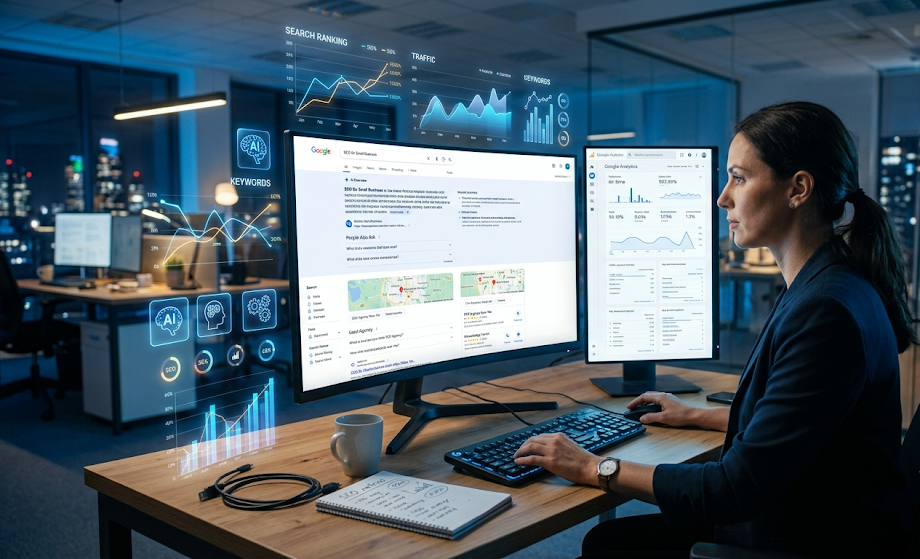
Search engines have changed dramatically over the last few years. Instead of simply displaying a list of blue links, modern search engines now provide direct answers through featured snippets, AI-generated overviews, knowledge panels, local packs, maps, calculators, weather widgets, shopping results, and other rich search features. As a result, users often find the information they need without ever clicking on a website.
This growing trend is known as zero-click search, and it has become one of the biggest challenges—and opportunities—for digital marketers, publishers, businesses, and SEO professionals.
At first glance, zero-click searches may seem like a threat because they reduce organic website traffic. However, smart businesses understand that visibility, authority, and brand recognition are becoming just as valuable as clicks. Appearing directly within AI-generated answers or featured search results can strengthen your brand, increase trust, and influence purchasing decisions even when users never visit your website.
What Is Zero-Click Search?
A zero-click search occurs when a user performs a search query and receives the answer directly on the search results page without needing to click on any website.
Instead of opening multiple pages, users receive immediate information from search features such as:
- AI-generated summaries
- Featured snippets
- Knowledge panels
- People Also Ask (PAA)
- Local business listings
- Maps
- Sports scores
- Weather forecasts
- Currency converters
- Flight information
- Definitions
- Calculators
- Shopping panels
For example, if someone searches:
“What is the capital of Australia?”
The search engine instantly displays:
Canberra
The user gets the answer immediately without clicking another website.
Why Zero-Click Searches Are Increasing
Several factors have accelerated the rise of zero-click searches.
AI-Powered Search Experiences
Artificial intelligence allows search engines to generate detailed answers by combining information from multiple trusted sources.
Mobile Search Growth
Mobile users prefer quick answers rather than browsing multiple websites.
Voice Search
Voice assistants provide spoken answers instead of lists of webpages.
Better Search Features
Search engines continuously introduce interactive features that satisfy user intent instantly.
Faster User Experience
Providing immediate answers improves user satisfaction and keeps people within the search platform.
How Zero-Click Search Works
Modern search engines use several technologies together:
- Natural Language Processing (NLP)
- Large Language Models (LLMs)
- Semantic Search
- Entity Recognition
- Knowledge Graphs
- Structured Data
- Machine Learning
- Retrieval-Augmented Generation (RAG)
These technologies help search engines understand content, identify trustworthy information, and display direct answers.
Types of Zero-Click Search Results
Featured Snippets
Featured snippets display concise answers extracted from webpages.
They often appear above traditional search results.
Example:
“What is SEO?”
The search engine displays a short definition.
AI Overviews
AI-generated summaries combine information from several trusted websites.
These summaries answer complex questions directly.
Knowledge Panels
Knowledge panels display facts about:
- Businesses
- Celebrities
- Organizations
- Movies
- Books
- Historical events
People Also Ask (PAA)
Expandable questions encourage users to explore related topics without leaving the search page.
Local Packs
Local searches display:
- Maps
- Reviews
- Phone numbers
- Business hours
- Directions
Shopping Results
Users can compare:
- Prices
- Reviews
- Availability
- Product images
without visiting multiple websites.
Instant Answers
These include:
- Weather
- Currency conversion
- Unit conversion
- Calculations
- Time zones
- Definitions
Impact of Zero-Click Search on SEO
Traditional SEO focused almost entirely on increasing website traffic.
Today’s SEO focuses on:
- Brand visibility
- Authority
- Trust
- AI citations
- User engagement
- Conversion quality
Traffic remains important, but visibility across search ecosystems matters more than ever.
Does Zero-Click Search Hurt Website Traffic?
In many cases, yes.
Informational searches often generate fewer clicks because users receive answers immediately.
However, businesses that adapt can benefit through:
- Increased brand awareness
- Better credibility
- Higher-quality visitors
- More qualified leads
- Greater customer trust
The goal is no longer just attracting clicks but becoming the trusted source behind the answer.
Why Businesses Should Care
Even if users don’t click, they still see your brand.
Repeated visibility creates familiarity.
When customers are ready to purchase, they are more likely to remember brands that consistently appear in search results.
This makes zero-click optimization an essential branding strategy.
Core Zero-Click Search Strategies
Focus on Search Intent
Understand exactly what users want.
Common intent categories include:
- Informational
- Navigational
- Transactional
- Commercial Investigation
Your content should fully satisfy the specific intent.
Answer Questions Clearly
Direct answers increase your chances of appearing in:
- Featured snippets
- AI summaries
- Voice search
- People Also Ask
Start sections with concise definitions before expanding the explanation.
Optimize for Featured Snippets
Structure content using:
- Definitions
- Lists
- Tables
- Numbered steps
- Short paragraphs
Example:
What is Zero-Click Search?
Answer in 40–60 words.
Then provide additional details.
Use Conversational Language
Modern search queries resemble natural conversations.
Instead of targeting:
“best SEO tools”
Optimize for:
“What are the best SEO tools for small businesses in 2026?”
This aligns better with AI-powered search.
Create Comprehensive Content
Search engines favor pages that cover topics thoroughly.
Include:
- Definitions
- Benefits
- Challenges
- Examples
- Comparisons
- FAQs
- Best practices
- Future trends
Comprehensive articles improve citation opportunities.
Build Topic Authority
Instead of publishing unrelated content, create clusters.
Example:
SEO Cluster
- Technical SEO
- On-page SEO
- Local SEO
- GEO
- Zero-click search
- AI search
- Keyword research
- Structured data
Topic clusters demonstrate expertise.
Implement Structured Data
Schema markup helps search engines understand content.
Useful schema types include:
- FAQ
- HowTo
- Article
- Product
- Review
- Organization
- Breadcrumb
- Local Business
Structured data increases eligibility for rich results.
Optimize for Voice Search
Voice queries are usually longer.
Examples:
- How do I improve website speed?
- What is the best CRM software?
- How does AI search work?
Write naturally and conversationally.
Improve E-E-A-T
Experience, Expertise, Authoritativeness, and Trustworthiness remain essential.
Ways to strengthen E-E-A-T:
- Include author information
- Add references
- Publish original research
- Share real-world experience
- Keep content updated
Create High-Quality FAQs
FAQ sections answer additional user questions.
Benefits include:
- Better semantic coverage
- Increased AI understanding
- Improved snippet opportunities
Optimize Images
Use:
- Descriptive filenames
- Alt text
- Captions
- Relevant surrounding content
Images can also appear in search results.
Build Strong Internal Links
Connect related articles.
Example:
A Zero-Click Search article can link to:
- SEO Basics
- GEO
- Technical SEO
- AI Search Optimization
Internal links strengthen topical authority.
Target Long-Tail Keywords
Instead of:
“SEO”
Use:
- How to optimize for AI search
- Zero-click search strategies
- How featured snippets work
Long-tail queries often generate higher-quality visitors.
Improve Content Readability
Write content that is easy to scan.
Use:
- Headings
- Bullet points
- Tables
- Short paragraphs
- Visual hierarchy
Readable content is easier for both users and AI systems.
Publish Original Research
Search engines value unique information.
Examples include:
- Industry surveys
- Case studies
- Experiments
- Customer insights
- Performance reports
Original data improves citation potential.
Keep Content Fresh
Update:
- Statistics
- Product recommendations
- Screenshots
- AI developments
- SEO best practices
Fresh content is more likely to appear in AI-generated summaries.
Zero-Click SEO for Local Businesses
Local businesses benefit enormously from zero-click visibility.
Optimize:
- Business profile
- Reviews
- Business hours
- Photos
- Contact details
- FAQs
- Service descriptions
Many customers call directly from search results without visiting websites.
Zero-Click Strategies for eCommerce
Product pages should include:
- Reviews
- Product schema
- FAQs
- Comparison tables
- High-quality images
- Detailed descriptions
Rich product information increases visibility.
Zero-Click Strategies for Publishers
Publishers should create:
- In-depth guides
- Statistics pages
- Industry reports
- Educational resources
- Evergreen content
Authority increases the chances of being referenced by AI systems.
Zero-Click Strategies for SaaS Companies
Focus on:
- Product tutorials
- Documentation
- Comparison articles
- Case studies
- Integration guides
Educational content builds trust before purchase.
Measuring Zero-Click Success
Traditional traffic metrics are no longer enough.
Track:
- Brand searches
- Featured snippet ownership
- AI citations
- Impression growth
- Visibility in search features
- Local profile actions
- Conversion rate
- Returning visitors
- Direct traffic
These indicators provide a better picture of performance.
Common Mistakes to Avoid
Avoid these outdated SEO practices:
- Keyword stuffing
- Thin content
- Duplicate pages
- Clickbait titles
- Poor formatting
- Ignoring search intent
- Outdated information
- Weak internal linking
- Low-quality AI-generated content
The Role of AI in Zero-Click Search
Artificial intelligence has transformed how search engines deliver information.
AI can:
- Understand user intent
- Summarize content
- Compare products
- Answer complex questions
- Recommend services
- Generate personalized responses
This makes quality content more important than ever.
Future Trends
Several developments will shape zero-click search over the next few years.
Personalized Search Results
AI will customize answers based on user preferences and behavior.
Voice-First Experiences
Voice assistants will become more accurate and conversational.
Visual Search Expansion
Users will increasingly search using images rather than text.
AI Shopping Assistants
Generative AI will recommend products based on personalized needs.
Autonomous AI Agents
AI systems may complete research and purchasing tasks with minimal human involvement.
Zero-Click Search Optimization Checklist
Before publishing content, ensure you:
- Understand user intent.
- Answer the primary question immediately.
- Use clear headings.
- Include structured data.
- Add FAQs.
- Build topical authority.
- Link related articles.
- Optimize for voice search.
- Improve readability.
- Publish original insights.
- Update content regularly.
- Strengthen E-E-A-T signals.
- Optimize images.
- Monitor featured snippet opportunities.
- Measure visibility beyond clicks.
Frequently Asked Questions
Is zero-click search bad for SEO?
Not necessarily. While some searches generate fewer clicks, appearing in AI overviews, featured snippets, and other search features can significantly increase brand visibility and authority.
How can I increase my chances of appearing in zero-click results?
Create comprehensive, well-structured content that answers user questions clearly, implement structured data, optimize for search intent, and regularly update your content with accurate information.
Does zero-click search eliminate the need for traditional SEO?
No. Traditional SEO remains the foundation for discoverability. Zero-click optimization builds on those fundamentals by making content easier for search engines and AI systems to understand and present directly in search results.
Are featured snippets still important in 2026?
Yes. Featured snippets continue to drive visibility and often serve as source material for AI-generated answers, voice assistants, and other search features.
What industries benefit the most from zero-click optimization?
Local businesses, healthcare providers, financial services, publishers, educational websites, SaaS companies, and eCommerce brands all benefit from optimizing for zero-click search because users frequently seek quick answers in these sectors.
Conclusion
Zero-click search is reshaping the way people discover information online. As search engines increasingly provide direct answers through AI-generated overviews, featured snippets, knowledge panels, and other rich search experiences, success is no longer measured solely by website traffic. Brands that focus on delivering accurate, authoritative, and user-centric content can earn valuable visibility even when users don’t click through to their websites.
The future of SEO lies in balancing traditional optimization techniques with strategies designed for AI-driven search. By understanding user intent, creating comprehensive content, implementing structured data, strengthening E-E-A-T, and continuously updating your information, you can position your website as a trusted source for both search engines and generative AI platforms. Businesses that embrace zero-click search today will be better prepared to thrive in the evolving digital landscape of 2026 and beyond.